

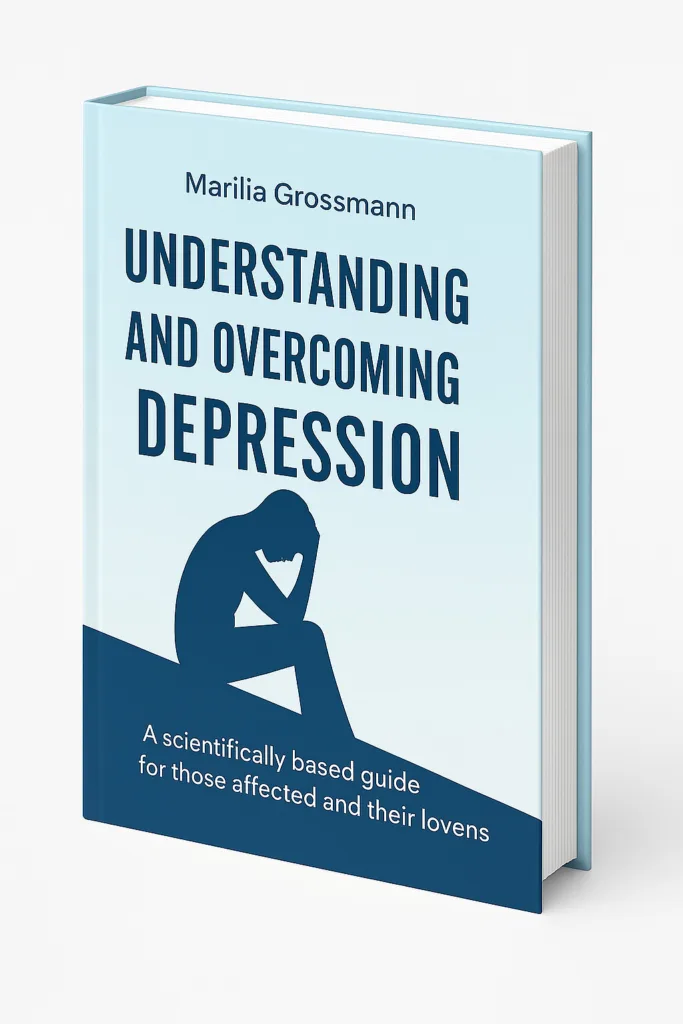
eBook – Understanding and Overcoming Depression
Depression is more than just temporary sadness – it’s a serious medical condition that affects thinking, emotions, and behavior. This book provides scientifically grounded knowledge, explores different forms of depression, explains symptoms and causes, and presents proven treatment options along with self-help strategies.
It helps you better understand the illness, find hope, and take concrete steps toward recovery – whether for yourself or for someone you care about.
-
 AuthorMarilia Grossmann
 -
 LanguageEnglish
 -
 FormatE-Book
 -
 PublisherSelf-published
 -
 Pagesapprox. 200
 -
 Release Date2025
 -
 CategoryPsychology & Self-Help
 -
 Series“Mental Health”
 -
 Price$ 10.00
👉 Get Your Copy Now
“Understanding and Overcoming Depression” – the compassionate guide for greater emotional well-being.
Buy NowOnly $ 10.00 (incl. VAT)
60-day money-back guarantee, no questions asked

“Understanding and Overcoming Depression” – your compassionate guide for more clarity, hope, and emotional strength.
📘 eBook
What can you expect from this guide?
- Scientifically based foundations – clear definitions, distinctions & common myths
- Types of depression – major depression, dysthymia, seasonal, postpartum, bipolar
- Understanding symptoms – psychological, physical & social (explained clearly)
- Causes in the biopsychosocial model – interaction of biology, psychology & environment
- Diagnosis & treatment – psychotherapy, medication, complementary approaches (treatment pyramid)
- Self-help in everyday life – daily structure, exercise, sleep, nutrition, relaxation
- Exercises & methods – mindfulness, thought-stopping, positivity journal, mini-meditations
- Support from family & friends – do’s & don’ts plus self-care
- Support services & emergency contacts – local emergency number (e.g., 112/911) and hotlines
- Templates & graphics – e.g., daily planner, positivity journal, symptom overview
🎁 Everything you need to understand and overcome depression – evidence-based, compassionate, and practical.
Science, Healing, and the Human Experience
A clear, practical, and compassionate guide to depression – with knowledge, exercises, and hope.
Depression affects thoughts, the body, and relationships – and is still often misunderstood. This eBook provides clarity, encouragement, and practical ways forward in daily life.
“Understanding and Overcoming Depression” combines evidence-based knowledge with simple methods. The goal: relief, orientation, and concrete steps – for those affected and their loved ones.
- Clearly explained: types, symptoms, myths – without jargon
- Practical help: structure, exercise, sleep, nutrition – easy to apply
- Exercises & methods: mindfulness, thought-stopping, positivity journal
- For loved ones: do’s & don’ts plus self-care
- Immediate help: support services and emergency contacts
Evidence-based – and at the same time close to everyday reality.
Templates and mini-exercises help you stay on track:
- Daily & weekly planners
- Mini-meditations & mindfulness
- Treatment pyramid as orientation
Knowledge, methods, and confidence – in a guide that supports you step by step.
Discover the eBook nowOnly $ 10.00 (incl. VAT)
60-day money-back guarantee, no questions asked
Chapter 1 – Understanding Depression
What is Depression?
Depression is a mental illness that affects a person’s entire experience – feelings, thoughts, bodily sensations, and behavior. In everyday language it is often confused with “feeling down” or “being sad.” But depression is much more: while sadness is a normal, temporary emotion that fades after a few days or weeks, depression is a persistent condition that lasts for weeks to months, is more intense, and affects life so severely that those affected often cannot cope without support.
Distinguishing from Normal Sadness
Sadness typically arises as a reaction to a specific event – for example a loss, a disappointment, or a difficult life phase. It is unpleasant, but at the same time a normal part of human experience. Depression, however, can occur without a clearly identifiable trigger. It robs individuals of the ability to feel joy, even in situations that used to be positive. Some describe this state as “everything is gray” or as an “emotional vacuum.”
Medical Classification
Medically, depression is classified among the affective disorders, illnesses that primarily affect mood. A key feature is a persistently negative mood that lasts at least two weeks. According to estimates by the World Health Organization (WHO), more than 280 million people worldwide suffer from depression. This makes it one of the most common mental health problems overall and one of the leading causes of disability and disease burden globally.
It is important to understand: depression is not a character flaw, nor is it a sign of laziness or lack of willpower. Rather, it is the result of a complex interplay of biological, psychological, and social factors. This perspective relieves those affected, because it shows: no one chooses depression, no one is “to blame themselves.”
Everyday Experience of Those Affected
The effects of depression are evident in daily life. Things that once brought joy – a hobby, meeting friends, listening to music, or exercising – suddenly seem meaningless. Even small tasks such as shopping, showering, or making a phone call can feel overwhelming. Many affected people report thoughts like “I am worthless” or “It will never get better.” These inner beliefs intensify the suffering and can lead to a vicious cycle: the stronger the negative perspective, the harder it becomes to have positive experiences.
Depression also manifests physically: many feel permanently exhausted, sleep poorly or too much, experience appetite changes, or suffer from pain without an organic cause.
Diagnostic Criteria
Medical classification systems such as ICD-11 or DSM-5 define clear criteria. For depression to be diagnosed, the three main symptoms –
- Low mood,
- Loss of interest and pleasure,
- Lack of drive –
must be present almost daily for at least two weeks. In addition, further symptoms must occur, such as:
- Sleep disturbances,
- Appetite changes,
- Feelings of guilt and worthlessness,
- Concentration difficulties,
- Psychomotor retardation or agitation,
- Thoughts of death or suicide.
The severity of depression depends on how many of these symptoms are present and how strongly they impair daily life.
Societal Dimension
Depression is a widespread illness. It is estimated that about one in five people will experience at least one depressive episode in their lifetime. This means that almost every family, circle of friends, or workplace is directly or indirectly affected. Yet depression is often recognized too late because those affected conceal their symptoms or cannot identify them themselves.
The social relevance is also reflected in the fact that depression is one of the most common causes of disability and early retirement. It causes high personal, social, and economic costs – another reason why education and prevention are so important.
Relief and Hope
A clear definition of depression provides orientation: it shows that depression is a serious illness – not imagined and not self-inflicted. It can affect anyone, regardless of age, gender, education, or social background. At the same time, this knowledge offers encouragement: depression is treatable. With psychotherapy, medication, self-help, exercise, and social support, there are many effective ways to reduce symptoms and regain stability.
Conclusion
“What is depression?” – this question can be summarized as follows: depression is not mere sadness but a multifaceted illness that profoundly affects life. It arises from an interplay of various factors, manifests in both psychological and physical symptoms, and can become life-threatening if left untreated. Anyone who recognizes the symptoms should seek help early. The earlier depression is treated, the better the chances of recovery and of living a fulfilling life.
Chapter 2 – Causes and Mechanisms
What Exactly Happens in Depression?
Depression is not simply a “bad mood,” but an illness that acts on multiple levels of human experience. Feelings, thoughts, body, and behavior change simultaneously – which explains why the illness is so profound and burdensome.
Emotional Level – Emotional Emptiness Instead of Sadness
Many affected people report not only sadness but a deep inner emptiness, an “emotional fog,” or a heavy weight they carry like an invisible burden. Some even say: “I don’t feel anything anymore.” This emotional vacuum is especially distressing because it blocks access to positive emotions. Things that once brought joy – a walk, listening to music, or contact with friends – lose their meaning. Life feels alien, meaningless, or drained.
Feelings of guilt or of being a burden to others are often added. Many describe an inner voice that constantly criticizes them. The emotional dimension of depression is therefore much more complex than mere sadness: it includes emptiness, guilt, hopelessness, and self-devaluation.
Cognitive Level – Rumination and Negative Thought Patterns
On the cognitive level, negative thought patterns dominate. People with depression ruminate endlessly about past mistakes, doubt their worth, and see the future as hopeless. These thought spirals run automatically and often cannot be stopped by willpower. Positive thoughts or hopes have little space left.
Decisions become tormenting, even small ones like “What should I eat?” can demand enormous effort. Concentration declines, many feel “foggy.” In extreme cases, a kind of mental block occurs, where hardly any clear line of thought is possible. This phenomenon reinforces helplessness – one knows one “should think differently,” but simply cannot.
Physical Level – Exhaustion and Pain
The body is also affected. Many feel permanently exhausted, even after sufficient sleep. Typical are sleep disturbances: difficulty falling asleep or staying asleep on the one hand, excessive sleep on the other. Appetite also changes: some lose any sense of hunger, while others experience cravings, often for sweets or carbohydrates.
In addition, physical complaints occur that have no organic cause: headaches, back pain, gastrointestinal problems, or muscle tension. These are called somatic symptoms. They make clear that depression is not a “purely psychological” illness, but affects the entire organism.
Behavioral Level – Withdrawal and Standstill
In behavior, depression often manifests as withdrawal and avoidance. Appointments are canceled, hobbies abandoned, social contacts avoided. Step by step, the world narrows. From the outside this may look like disinterest or laziness, but in reality it comes from the feeling of having no strength left.
Many describe that even the smallest actions – getting up, showering, shopping – feel like insurmountable mountains. This lack of drive is one of the core symptoms. In the worst case, it leads to people not leaving their bed for days.
Biological Level – Changes in the Brain
On the biological level, measurable changes can be detected. Neurotransmitters such as serotonin, dopamine, or norepinephrine are out of balance. The reward system responds less strongly to pleasant stimuli – joy, motivation, and interest fade.
The stress hormone system (HPA axis) is also often chronically activated. Cortisol levels remain high, intensifying the feeling of inner tension and burdening the body over time. Modern imaging techniques such as MRI or PET also show that certain brain regions work differently – for example the hippocampus (memory and stress regulation), the amygdala (emotions), or the prefrontal cortex (planning, control).
Interaction of Levels
All levels reinforce each other. Negative thoughts (“I can’t do this”) lead to withdrawal, which in turn intensifies feelings of isolation. Sleep disturbances and exhaustion worsen the lack of drive, which again leads to guilt feelings. Thus a vicious cycle emerges, difficult to break without support.
Everyday Consequences
The consequences are serious: work, studies, or school can no longer be managed, relationships break apart, self-esteem declines. Many affected people experience that outsiders cannot understand their situation – “You have everything, just be happy” – which deepens feelings of misunderstanding and loneliness.
More Than “in the Head”
All this shows: depression is not just a bad mood or a matter of willpower. It is a complex illness of the entire organism, affecting thoughts, feelings, body, and behavior equally. That is why those affected need support and understanding – both from relatives and from professionals.
Conclusion
Depression alters the perception of one’s own life on every level. It robs joy and hope, produces physical symptoms, blocks decisions, and leads to withdrawal. This complexity explains why depression is a serious illness requiring professional help – and why it is so important that those affected are taken seriously and supported.
Chapter 3 – Healing and Resilience
How to Recognize Depression? (Key Symptoms)
Recognizing depression is crucial in order to enable timely help. Specialists have therefore defined three so-called key symptoms, which are considered the core of the diagnosis:
- Depressed mood most of the day, nearly every day.
- Loss of pleasure and interest in activities that were once important or enjoyable.
- Reduced drive or easy fatigability.
These three features form the foundation of the diagnosis. They must persist for at least two weeks almost continuously in order to be classified as depression. What matters is not only their presence, but also their intensity and the significant impairment of everyday life.
Accompanying Symptoms
In addition to the key symptoms, further complaints occur that complement the clinical picture:
- Sleep disturbances (difficulty falling asleep, staying asleep, early awakening, or excessive sleep)
- Appetite changes (reduced appetite or cravings, often linked with weight changes)
- Concentration difficulties and memory problems (“I can’t think clearly”)
- Feelings of guilt, worthlessness, or failure
- Psychomotor changes: slowed speech or movements, sometimes inner restlessness and agitation
- Suicidal thoughts or longing for death, which occur in more severe cases and must always be taken seriously
The more of these symptoms occur in addition to the key symptoms, the more likely and severe the diagnosis of depression becomes.
Distinguishing from Normal Low Mood
A central criterion for distinction is duration. A low mood after stressful events – such as a breakup or an exam – usually improves after days or weeks. Depression, by contrast, persists for at least two uninterrupted weeks and continues even when there is no objective reason for the low mood.
Another distinguishing factor is the depth of the symptoms. While sadness or stress is usually broken by positive moments, people with depression experience little relief. Even joyful events or good news trigger no real sense of joy.
Finally, impairment is decisive: depression massively restricts life. Work, studies, or school falter; relationships suffer; hobbies and activities are abandoned.
A simple rule of thumb is: Duration + Depth + Impairment = Depression
Different Manifestations
Not every depression looks the same. Some people appear outwardly still functional, able to work, laugh, or seemingly manage their daily lives. Yet inside they suffer severely – this phenomenon is often called “High-Functioning Depression”.
Others show more physical symptoms, such as pain, fatigue, or digestive problems, without it being immediately apparent that it is a mental illness. Especially in older people or in cultures where little is said about emotional suffering, depression can remain undetected for a long time.
Children and adolescents can also be affected – but in them depression often presents differently: not through sadness, but through irritability, decline in performance, or withdrawal.
Diagnostic Tools
For orientation, there are self-tests or questionnaires that can provide initial indications of whether depression may be present. These include standardized instruments such as the Patient Health Questionnaire (PHQ-9). They can help people take their own signals seriously. However, it is important to note: these tests never replace a professional diagnosis.
A reliable assessment is made exclusively by doctors, psychotherapists, or psychiatrists. They conduct structured interviews, systematically record symptoms, and also consider possible physical causes that may trigger similar complaints.
Why Early Recognition is So Important
Many people suffer silently for a long time before seeking help – out of shame, fear of stigma, or the belief that they “shouldn’t make a fuss.” This hesitation is dangerous. Untreated, depression can become chronic, increase the likelihood of relapse, and raise the risk of secondary problems such as anxiety disorders or addictions.
The earlier depression is recognized and treated, the greater the chances of improvement and stability. Studies show that the prognosis is significantly better when people receive professional help in time.
Taking Warning Signs Seriously
Suicidal thoughts must be taken especially seriously. They are not a “cry for help” in a trivial sense, but an expression of deepest despair. Anyone who notices such thoughts in themselves or others should seek help immediately – whether from a general practitioner, a psychiatric emergency unit, or through crisis hotlines.
Conclusion
Recognizing depression means taking the combination of key symptoms, additional complaints, duration, and severity seriously. It is not enough to label occasional sadness as depression – but it is equally harmful to trivialize genuine symptoms.
A clear diagnosis is the first step toward treatment and recovery. It relieves those affected because it shows: “What I am experiencing has a name – and there is help.” The more people are informed about the signs, the faster those affected can find support.
Depression is not weakness, but a medically explainable and treatable illness. Recognizing the warning signs allows for early action – shortening suffering and saving lives.